On paper, most B2B GTM machines look solid.
You’ve got marketing automation humming, campaigns running, content shipped, events lined up. You’ve got sales engagement platforms, dialers, sequencers, dashboards. The tech stack is full, the reports are impressive.
And yet… opportunities still leak out in between.
Somewhere between “this looks interesting” and “we’re ready to buy”, a huge chunk of pipeline just fades away.
That “somewhere” is what I think of as the missing GTM layer — and once you see it, you can’t unsee it.
The Layer Between Marketing and Sales That Doesn’t Show Up in Diagrams
If you strip GTM down to its simplest layers, most teams effectively run on three:
Layer 1 – Demand generation.
Marketing automation captures leads, scores activity, nurtures, retargets. HubSpot, Marketo, ad spend, content — all of that lives here. The output: MQLs flowing into the CRM.
Layer 3 – Sales execution.
Sales engagement tools send emails, manage sequences, log calls. SDRs and BDRs spend their days here, grinding through targets and booked meeting numbers.
Between those two is Layer 2 — the messy, human layer where real work happens:
- Researching accounts and people
- Qualifying and prioritizing
- Deciding who to go after first
- Watching for signals and timing
- Coordinating outreach across multiple buyer groups
- Building context for a clean handoff to AEs
Every rep knows this layer. It’s the “open 10 LinkedIn tabs, a few spreadsheets, three Slack threads and ‘I’ll remember to follow up’ notes” part of the job.
It just doesn’t exist as a product category. It barely exists on org charts. But this is exactly where the majority of opportunities die.
What Really Happens in the Missing Layer?
Let’s be fair to GTM teams: no one is sitting on leads intentionally.
The problem is the scale and speed of what Layer 2 is expected to handle.
Hundreds (or thousands) of MQLs hit the system every month. For each one, the “ideal” workflow looks like this:
- 20–25 minutes of proper research – company context, persona mapping, likely pain points, relevant triggers.
- Another ~10 minutes to personalize outreach beyond just “first name + company”.
- Ongoing monitoring: did they come back to the site, hit pricing, invite colleagues, forward an email?
- Coordinating multithreaded outreach inside the same account so you don’t message four people with the exact same line.
Do that properly and you’re over half an hour per prospect. That math doesn’t work when you’re staring at a queue of 177 leads plus outbound accounts.
So people do what they have to do:
- Shortcut research
- Lean on templates with light customization
- Let sequences run without reacting to micro-signals
- Single-thread the account because multithreading manually is too heavy to juggle at volume
It’s not that reps aren’t working. They’re doing the best they can inside broken math.
Layer 2 isn’t failing because teams don’t care. It’s failing because, at current volumes, handling this manually is humanly impossible.
Why This Layer Stays Invisible (Even Though It’s Where Conversion Happens)
There are a few reasons this gap keeps getting ignored:
There’s no obvious category for it.
Marketing automation is a category. Sales engagement is a category. CRM is a category. “The orchestration layer between marketing and sales?"
Ownership is fragmented.
Ops has a piece, marketing has a piece, sales has a piece. Because it’s spread across roles and teams, no one is explicitly accountable for how this layer performs. And we all know: when everyone owns it, no one really owns it.
Metrics don’t call it out.
Marketing proudly reports MQLs. Sales reports opportunities and closed revenue. Very few teams can confidently answer: “What actually happens to leads between MQL and opp, and where exactly do they leak?”
The tough truth: companies converting ~20% of opportunities versus 5% haven’t magically found better leads or superhuman reps. They’ve simply made this middle layer smarter — automated research, real-time signal detection, and multithreaded orchestration instead of manual grind.
Turning the Missing Layer Into a System of Intelligence
This is where Honeycomb comes in.
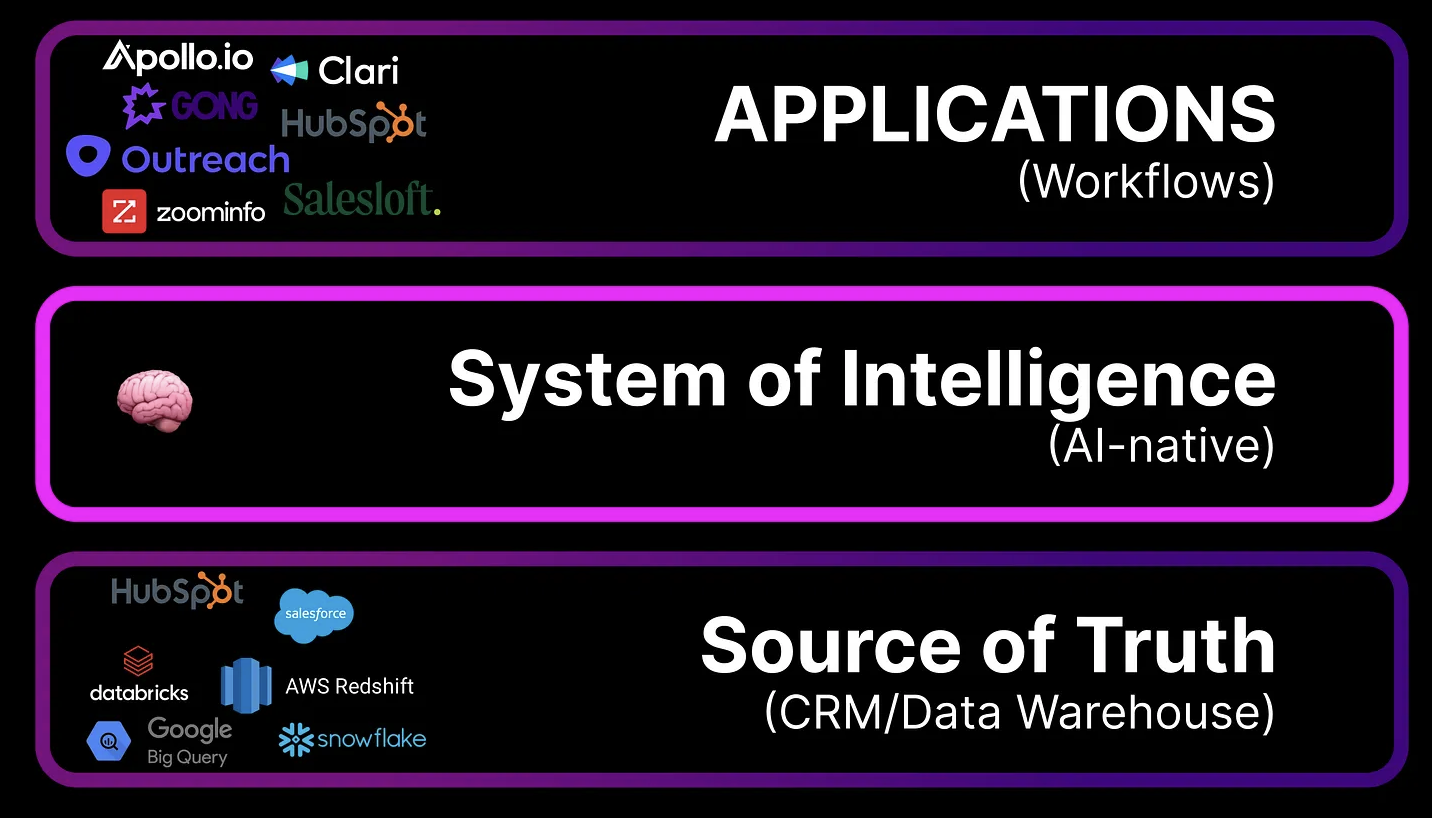
I don’t believe we need yet another siloed GTM tool. We need a system of intelligence that sits across the stack — the “brain” that watches what’s happening, understands context, and recommends what to do next.
For me, Honeycomb is that missing Layer 2 turned into a product:
- It takes in data from marketing, CRM, sales engagement, and public signals.
- It builds the buyer map — the real stakeholders, not just whoever filled a form.
- It detects intent and timing in real time instead of letting high-intent behavior vanish into a queue.
- It orchestrates actions across personas: who to engage, with what angle, and when.
- It learns from outcomes so the system gets sharper over time.
The point isn’t to replace reps. It’s to stop asking humans to do what a machine can do better: keep track of hundreds of micro-signals, across dozens of accounts, and turn that into a prioritized, adaptive plan.
We’re not trying to “fix SDRs” or rewrite how sales works from scratch.
We’re trying to stop wasting the work they’re already doing by making the GTM layer between marketing and sales truly intelligent instead of painfully manual.
That’s the layer I care about.
That’s the gap we’re building Honeycomb for.